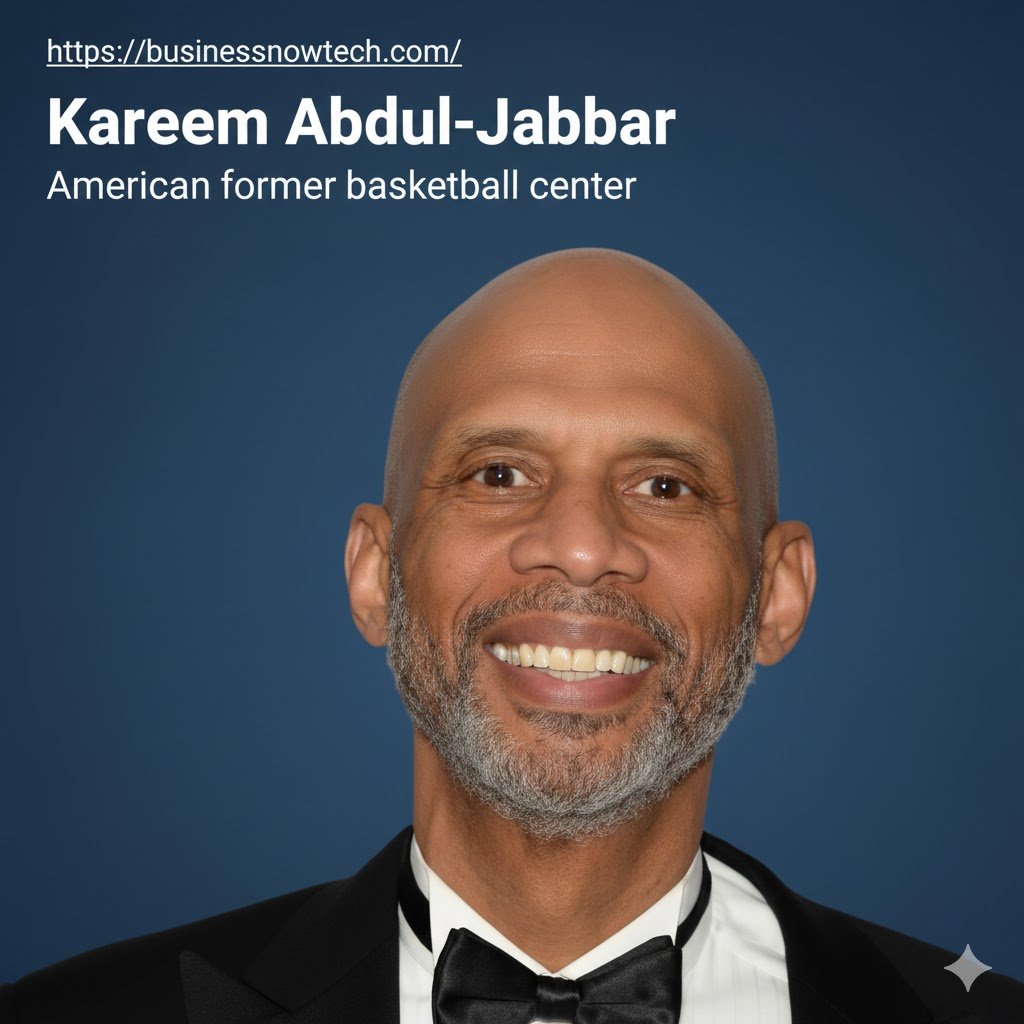
kareem abdul-jabbar
Kareem Abdul-Jabbar is a name that resonates deeply in the world of basketball. With a career spanning two decades and filled with accomplishments, records, and championships, Abdul-Jabbar is widely regarded as one of the greatest players in the history of the sport. But his impact transcends basketball alone—his contributions to social justice, his cultural influence, and his lasting legacy have solidified him as a global icon.
Early Life and the Formation of a Legend
Born Ferdinand Lewis Alcindor Jr. on April 16, 1947, in New York City, Kareem Abdul-Jabbar was always destined for greatness. Standing tall even as a young boy, he quickly showed a natural aptitude for basketball. Growing up in the heart of Harlem, he was exposed to a world rich in culture, history, and sport. By the time he was in high school at Power Memorial Academy, his dominance on the court was undeniable. He was a two-time New York City high school player of the year, setting the stage for an illustrious career.
Abdul-Jabbar’s college career at UCLA under legendary coach John Wooden was transformative. He led the Bruins to three consecutive NCAA titles from 1967 to 1969, earning the Most Outstanding Player title in the Final Four each year. During his college years, he not only established himself as an elite basketball player but also began to develop his identity—both as an athlete and as a man of purpose. It was during this time that he converted to Islam and changed his name to Kareem Abdul-Jabbar, which means “noble, powerful servant.”
NBA Career: A Legacy of Dominance
In 1969, Abdul-Jabbar was selected as the #1 overall pick by the Milwaukee Bucks in the NBA Draft. It was the beginning of an era that would leave a permanent mark on the game of basketball. Over the course of his career, he played 20 seasons in the NBA, spending the first six years with the Bucks and the remainder with the Los Angeles Lakers.
His impact on the game was immediate. He won the NBA Rookie of the Year award in 1970 and led the Bucks to their first NBA championship in 1971, an achievement that marked the start of a glittering career. His ability to score, rebound, and block shots quickly made him one of the league’s most feared players. But it was his trademark skyhook shot that became the symbol of his unstoppable talent—a move that no player was able to replicate or defend effectively.
Abdul-Jabbar’s skill set went far beyond the skyhook. He was a complete player: a dominant presence in the paint, an exceptional rebounder, and a skilled passer. His ability to elevate his teammates was evident throughout his career. He was a six-time NBA champion, winning his titles with both the Bucks and the Lakers. His partnership with Magic Johnson during the Lakers’ “Showtime” era, which spanned the 1980s, was instrumental in securing five championships for the team.
His longevity and consistency were key to his success. Playing well into his 40s, Abdul-Jabbar’s durability was unmatched. When he retired in 1989, he had amassed a total of 38,387 career points, a record that stood for nearly 35 years until LeBron James surpassed it in 2023. His scoring record is just one of the many benchmarks that solidified his place as one of the greatest players of all time. Beyond points, he retired as the all-time leader in field goals made, games played, and minutes played, leaving an indelible mark on the statistical history of the NBA.
The Cultural Icon: Beyond Basketball
While Abdul-Jabbar’s basketball career is legendary, his influence extends far beyond the court. He is an author, speaker, and cultural ambassador. His contributions to literature, particularly in the fields of history and race relations, have earned him recognition as an intellectual force. He has authored multiple books on topics ranging from basketball to social issues, offering a thoughtful and nuanced perspective on the world.
Abdul-Jabbar has always used his platform to speak out on issues of social justice and equality. He was one of the first athletes to publicly speak on behalf of racial and civil rights during the turbulent 1960s and 1970s. His courage to stand up for what he believed in, whether it was through protests or activism, helped pave the way for future generations of athletes to use their voices for change.
His influence on pop culture is also noteworthy. One of his most iconic roles came in the 1980 film Airplane!, where he played the comical co-pilot Roger Murdock. His appearance in the film is still celebrated for its humor and for showcasing his charm and versatility outside the sports world. Additionally, his relationship with Bruce Lee—with whom he starred in the classic martial arts film Game of Death—is legendary. Abdul-Jabbar was a practitioner of Jeet Kune Do, the martial art created by Lee, and the two shared a deep respect for each other, both as athletes and as men of principle.
Personal Life and Family
Kareem Abdul-Jabbar’s personal life is as rich and complex as his basketball career. He has been married twice and has five children, including his son Kareem Abdul-Jabbar Jr., who also played basketball at the collegiate level. Despite his fame, Abdul-Jabbar has always sought to maintain a sense of privacy and has largely kept his personal life out of the public eye.
His faith plays a significant role in his life, and his commitment to Islam is an integral part of his identity. He has been an advocate for religious tolerance and understanding, often speaking about the importance of spirituality in guiding one’s life.
Retirement and Legacy
After retiring from professional basketball in 1989, Abdul-Jabbar remained involved with the game in various capacities, including as a coach and mentor. His influence on the sport continues through his writing, speaking engagements, and role as an ambassador for the game.
As of today, Abdul-Jabbar is remembered not only for his basketball achievements but also for his unwavering commitment to social justice, education, and activism. His contributions to basketball and society have earned him numerous accolades, including the prestigious Presidential Medal of Freedom awarded by President Barack Obama in 2016.
Records and Accolades
- 6× NBA Champion
- 6× NBA MVP (most in NBA history)
- 19× NBA All-Star
- 2× NBA Finals MVP
- NBA’s All-Time Leading Scorer (until 2023)
- Named to NBA’s 35th, 50th, and 75th Anniversary Teams
- Inducted into the Basketball Hall of Fame (1995)
Conclusion
Kareem Abdul-Jabbar legacy is built on more than just his basketball accomplishments. It’s his courage, intellect, and commitment to using his platform for change that truly set him apart. As an athlete, activist, author, and cultural icon, his influence on the game and the world is undeniable. Whether it’s the iconic skyhook, his championship rings, his writings, or his role in shaping the future of basketball, Kareem Abdul-Jabbar will always be remembered as one of the greatest and most multifaceted athletes in history.
About the Author