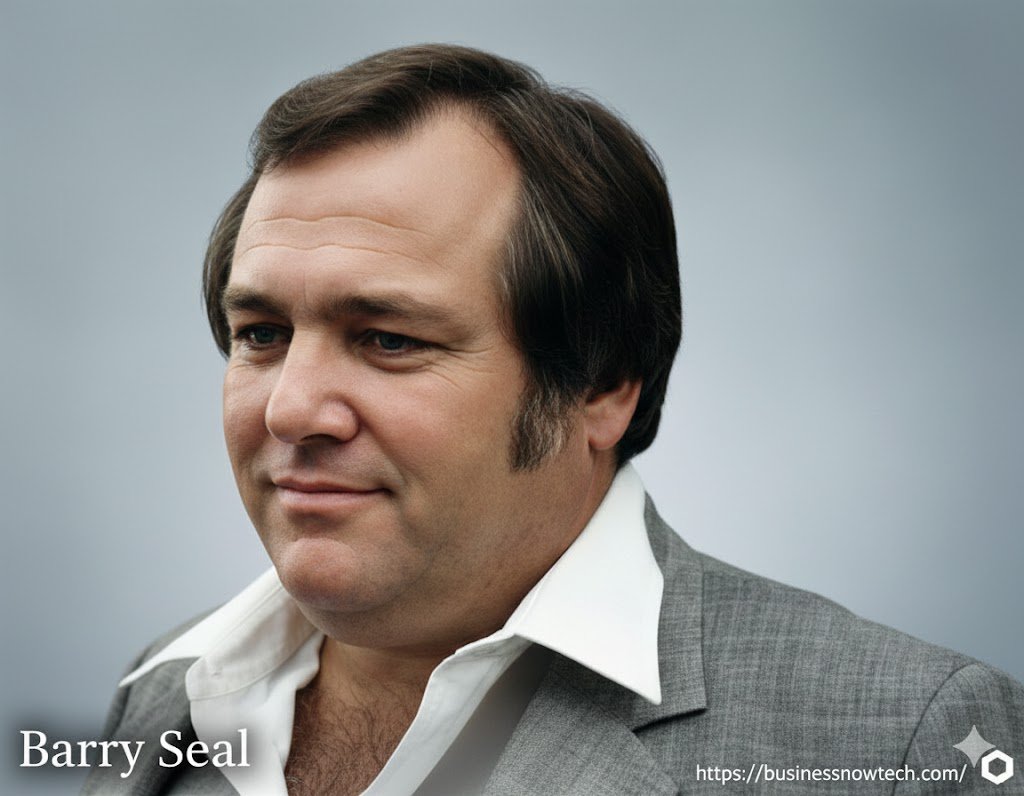
Barry Seal
Barry Seal, a name synonymous with high‑flying drug cartels, covert government operations, and a dramatic death, remains one of the most fascinating figures of the 20th century. His life was marked by daring aviation, criminal enterprise, and his eventual cooperation with U.S. authorities. While the film American Made, starring Tom Cruise, popularized his story, the real-life events that shaped Barry Seal’s legacy are far more complex and thrilling.
The Early Years of Barry Seal
Born on July 16, 1939, in Baton Rouge, Louisiana, Adler Berriman “Barry” Seal was raised in a relatively ordinary family. His father, Benjamin Curtis Seal, owned a small candy store, and his mother, Mary Lou, managed the household. From a young age, Barry was fascinated by planes and flying, a passion that would define his career. By the time he was a teenager, he had already earned his pilot’s license, marking the beginning of his long and complex relationship with aviation.
After high school, Seal pursued his dream and joined the Louisiana Army National Guard, where he trained as a pilot. He later went on to work for Trans World Airlines (TWA), becoming one of the youngest pilots at the time to fly for a major airline. Seal’s career in aviation was off to a promising start. But as often happens with people who feel invincible, his ambition and desire for excitement led him down a much darker path.
The Shift to Smuggling: Barry Seal’s Entry into the Underworld
In the early 1970s, Barry Seal’s life took a sharp turn as he became involved in illegal activities. His first brushes with the criminal underworld began with small smuggling jobs, transporting weapons and drugs. However, his skills as a pilot made him a key player in the global drug trade, particularly with the infamous Medellín Cartel.
Seal’s ability to fly clandestine missions to Latin America and back, often under the radar of law enforcement, turned him into one of the cartel’s most reliable pilots. By the late 1970s, he was flying large quantities of cocaine and marijuana into the United States, contributing significantly to the rise of the Medellín Cartel and the explosion of cocaine use in the U.S.
At the height of his smuggling career, Seal was making hundreds of thousands of dollars per flight, flying multiple missions each week. His operation was vast, and it was only a matter of time before the law caught up with him. But rather than face the consequences of his actions, Seal would take an unexpected step that would change his life forever.
The DEA and Barry Seal’s Role as an Informant
In 1984, after being arrested by the U.S. government for smuggling and money laundering, Seal faced the possibility of spending the rest of his life in prison. Rather than going to jail, he made a deal with the Drug Enforcement Administration (DEA): he would cooperate as an informant, providing critical intelligence about the Medellín Cartel’s operations in exchange for a lighter sentence.
Seal’s cooperation with the DEA was nothing short of extraordinary. He not only provided valuable intelligence about cartel leaders and operations but also went undercover, flying surveillance missions on behalf of the government. The information he supplied helped federal agents build cases that would lead to the downfall of some of the most dangerous drug traffickers of the time.
However, as Seal continued to work with the DEA, his life became even more dangerous. His role as a government informant put him on the radar of the very cartel he had once worked for, and soon, he would be marked for death.
Barry Seal’s Assassination: The Final Act of a Life Lived on the Edge
On February 19, 1986, Barry Seal was assassinated outside a Salvation Army halfway house in Baton Rouge, Louisiana, where he was serving a sentence as part of his agreement with the DEA. He was shot multiple times by hitmen working for the Medellín Cartel, who sought revenge for his betrayal.
His death was violent, quick, and in some ways, inevitable. Seal had made powerful enemies during his time with the cartel, and despite his cooperation with the U.S. government, the cartel was relentless in seeking retribution. Seal was 46 years old at the time of his death, and his murder marked the end of a turbulent and extraordinary life.
The Hollywood Portrayal: American Made and Tom Cruise’s Barry Seal
Barry Seal’s life, with all its drama, criminal enterprise, and government intrigue, naturally attracted Hollywood’s attention. The 2017 film American Made, directed by Doug Liman, stars Tom Cruise as Barry Seal. The film, while based on real events, takes significant creative liberties, portraying Seal as both a charismatic smuggler and an unwitting government pawn.
In the movie, Cruise’s portrayal of Seal captures the thrill and danger of his dual life, but the film veers into fictional territory, particularly with the depiction of Seal’s relationship with the CIA and his role in covert operations. While the film presents a fun and action-packed version of Barry Seal’s story, it’s important to remember that much of what happens in American Made is dramatized for entertainment purposes.
Nevertheless, the film brought Seal’s story to a new generation, introducing him to audiences who may have never heard of the notorious pilot. It also sparked renewed interest in the Iran-Contra affair and the covert operations that occurred during the Reagan administration.
Barry Seal’s Legacy: The Man Behind the Myth
The legacy of Barry Seal is complex. On one hand, he was a gifted pilot who became a key player in the global drug trade, smuggling billions of dollars’ worth of cocaine into the U.S. On the other hand, he was an informant whose intelligence helped bring down some of the most dangerous criminals of his time.
In the years following his death, Seal’s story has been reexamined in documentaries, books, and TV shows, further cementing his place in history. His life serves as a cautionary tale about the allure of easy money, the dangers of the drug trade, and the high cost of betrayal.
What Happened to Barry Seal’s Family?
Barry Seal’s family, particularly his wife, Deborah “Debbie” Seal, and their children, were significantly affected by his involvement in criminal activities and his tragic death. Deborah, who is portrayed as “Lucy Seal” in American Made, is still alive today. She has largely stayed out of the public eye since Barry’s assassination, choosing to raise their children away from the media’s prying eyes.
In the wake of Barry’s death, there were reports of financial struggles as his illicit wealth was seized by the U.S. government. The family faced difficulties as they tried to rebuild their lives after the tragedy.
Barry Seal’s Death: Who Killed Him?
The assassination of Barry Seal has been widely attributed to hitmen hired by the Medellín Cartel in retaliation for his role as a government informant. While no one has ever been convicted for the crime, the cartel’s long‑running vendetta against Seal was well‑documented.
Some conspiracy theories suggest that other parties, including government officials or individuals involved in the Iran-Contra affair, may have had a hand in his death. However, these claims remain speculative, and the official narrative holds that the cartel was responsible.
Barry Seal’s Net Worth: How Much Was He Worth?
At the peak of his smuggling career, Barry Seal reportedly earned millions of dollars from his drug-running operations. Estimates suggest that he may have made up to $60 million during his time working with the Medellín Cartel.
However, much of this wealth was never fully documented, and his net worth at the time of his death was significantly reduced due to government seizures. His life insurance policy and estate were also seized, leaving his family to contend with the aftermath of his criminal activities.
Conclusion
Barry Seal’s life was one of extremes: from a celebrated pilot to a notorious criminal and informant, his journey was filled with danger, deception, and betrayal. He lived fast, and ultimately, he died violently — a casualty of the very world he helped create.
While American Made provided a fun and engaging portrayal of his story, it’s important to recognize the complexity of Seal’s legacy. He was a man who played both sides, worked with law enforcement, and betrayed the very people who trusted him. His life serves as a cautionary tale about the dangers of greed, the allure of quick money, and the high price of betrayal.
Barry Seal’s story is one of the most dramatic and tragic in recent American history, and his influence continues to shape how we view the war on drugs, government informants, and the world of international smuggling.
About the Author