Nora Chavooshian
Introduction
Nora Chavooshian is a celebrated American artist, renowned for her contributions to sculpture and set design. Though her name may be familiar to some as the former wife of actor Joe Morton, her creative achievements stand as a testament to her own unique artistic journey. With a rich blend of craftsmanship, heritage, and creativity, Chavooshian has made her mark in both the art world and the entertainment industry. This article delves into her life, career, artistic legacy, and personal history, providing a deeper understanding of the woman behind the public figure.
Early Life and Background
Nora Chavooshian was born on October 25, 1953, in Philadelphia, Pennsylvania. While not much is known about her early life, it is evident that her upbringing played a significant role in shaping her creative path. Chavooshian is of Armenian descent, a factor that profoundly influences her artistic works, which often explore themes of identity, resilience, and memory. Growing up in a family with a rich cultural heritage, she was exposed to diverse forms of art, particularly in sculpture and visual storytelling, which would later become the foundation of her career.
Education and Artistic Development
Nora Chavooshian formal education began at the prestigious Pennsylvania Academy of the Fine Arts, where she honed her skills in sculpture. Further refining her artistic voice, she continued her studies at the San Francisco Art Institute. These formative years allowed her to explore different mediums, from traditional figure drawing to the more experimental aspects of sculpture. Her deep interest in three-dimensional art eventually led her to focus primarily on sculpture, a field where she would make significant contributions over the years.
In addition to her technical training, Nora Chavooshian work also reflects her passion for experimentation. Her studies weren’t confined to just creating static pieces; she was drawn to the interactivity of art, utilizing materials and textures that would challenge both herself and the viewer.
A Dual Career in Film and Art
Though Nora Chavooshian is best known today as a sculptor, her career began in the world of film production design. Her artistic flair was evident as she worked as a production designer and set decorator for several well-known films and television productions. In this capacity, she was tasked with creating immersive environments that told a story through visual elements.
Nora Chavooshian most notable work during this period includes her contributions to films like “The Beastmaster” (1982), where she helped design fantastical landscapes, and “After Hours” (1985), in which her set designs added to the movie’s atmosphere of surrealism and intrigue. These early years in production design allowed her to work with some of the most talented directors and designers in Hollywood, adding another dimension to her artistic capabilities.
However, as time went on, Chavooshian transitioned from the world of set design into full-time sculpture, where she would truly make her mark.
Sculpture: Chavooshian’s True Artistic Expression
By the late 1980s, Nora Chavooshian had moved away from film and stage design to focus on her sculptural works, which would become the cornerstone of her career. Her sculptures are deeply personal, often reflecting on themes of memory, identity, and the complexities of cultural history. With a unique approach to materials, Chavooshian is known for using bronze, cast forton, beads, and lace in her sculptures, blending organic textures with structural forms.
One of Nora Chavooshian most significant themes is memory—not just personal recollection, but collective memory and cultural inheritance. Her works often feature fragmented or cracked surfaces, symbolizing the delicate balance between what is visible and what is hidden. These pieces invite the viewer to consider what lies beneath the surface, both in the physical world and within ourselves.
Her pieces include notable works like “Tidal” and “Lace”, which employ traditional sculptural techniques to evoke personal and collective stories. The use of lace in particular speaks to the importance of women’s labor and heritage, making it a powerful symbol of both artistic beauty and historical significance.
Nora Chavooshian artistic practice is not just about creating beautiful objects; it’s a process of exploration and material experimentation, combining modern materials like mycelium (fungal-based casting) and biomaterials with classical approaches to sculpture. This blending of old and new creates a unique dialogue in her works, one that is both timely and timeless.
Joe Morton and Nora Chavooshian: The Public Couple
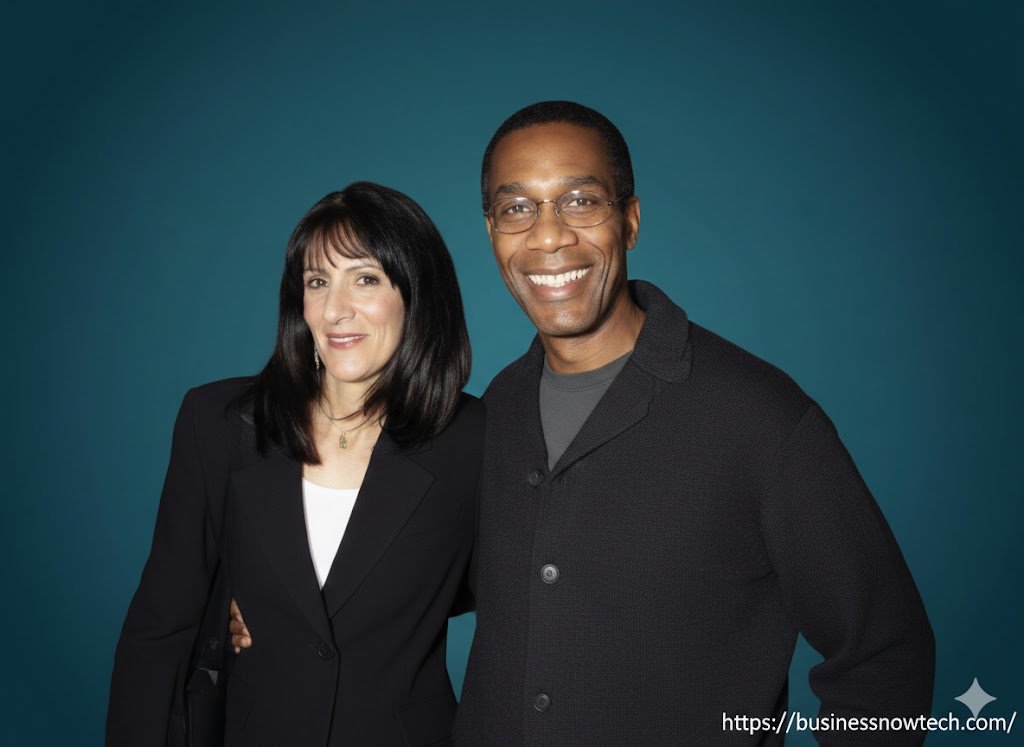
While Nora Chavooshian art has always been the focus of her career, her personal life has also garnered attention. In 1984, she married Joe Morton, a highly successful actor best known for his roles in “Scandal” and “Terminator 2: Judgment Day”. The couple was married for over two decades before they divorced in 2006.
Their marriage was one of mutual respect and shared values, and they had three children together: Hopi, Seta, and Ara Morton. The children have largely stayed out of the limelight, with little public information available about their lives.
Though their divorce brought a degree of separation from the public eye, Chavooshian and Morton have both continued to thrive in their respective careers. Morton remains a household name, with multiple Emmy nominations under his belt, while Chavooshian’s art has continued to receive critical acclaim in galleries and exhibitions around the world.
Chavooshian’s Legacy and Recognition
Despite a relatively private existence, Nora Chavooshian has made an indelible mark on the art world. Her sculptures have been featured in galleries and museums across the United States and Europe, with some of her most notable exhibitions at Denise Bibro Fine Art in New York and Max Hutchinson Gallery in Los Angeles. Her work is in private collections and remains a subject of interest for collectors, curators, and art enthusiasts alike.
Her art often explores deep and significant themes, and her unique use of textures and materials invites viewers to connect with the emotional and cultural significance of her work. By using symbolic elements such as lace, beads, and mycelium, Chavooshian continues to push the boundaries of what sculpture can be, while also honoring her Armenian heritage.
Nora Chavooshian work is frequently discussed in art circles, often being praised for its complexity and emotional resonance. It stands as a testament to her dedication to her craft and her unwavering commitment to creating art that speaks to personal, cultural, and historical themes.
Conclusion
Nora Chavooshian career as an artist, sculptor, and designer spans many decades, and she has proven herself to be a master in her field. From her early days in film production design to her later works as a celebrated sculptor, Chavooshian has never ceased to evolve and explore new forms of creative expression.
Her legacy is marked not only by her art but by the deeply personal and cultural themes she brings into her work. Through her pieces, she invites us to reflect on identity, memory, and the intersections of personal and collective history. Despite her connection to the celebrity world through her marriage to Joe Morton, Nora Chavooshian’s true achievement lies in her art, which continues to resonate with viewers and art lovers worldwide.
Her sculptures remain a powerful reminder of the strength of material and the complexities of the human experience.
About the Author