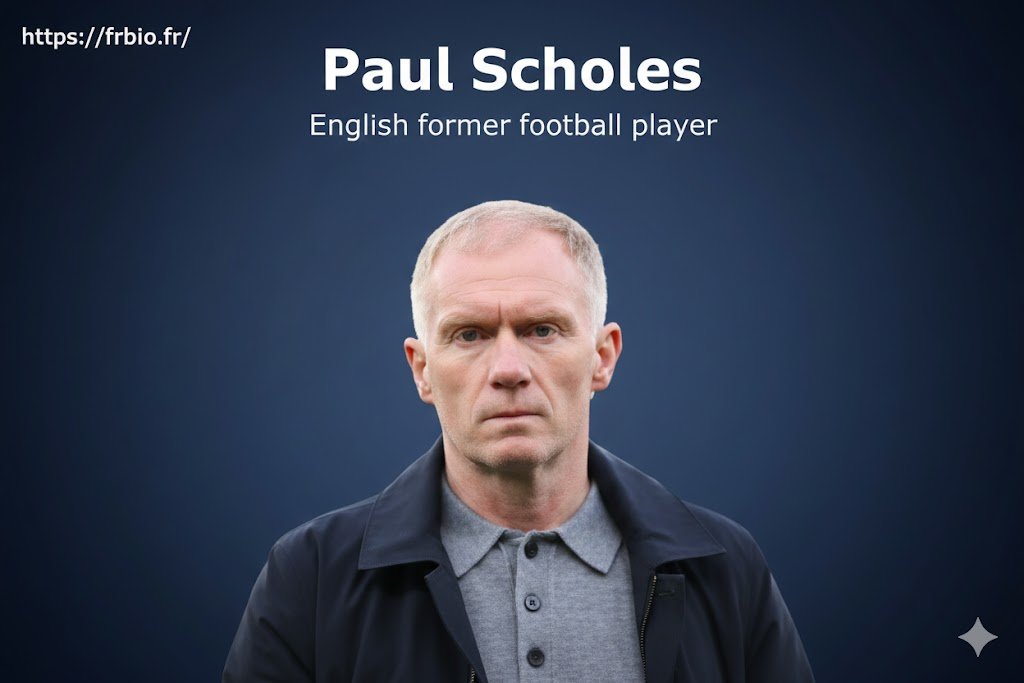
Paul Scholes
Introduction
Paul Scholes, a name synonymous with class, vision, and brilliance on the football pitch, is widely regarded as one of the best midfielders to ever grace the English Premier League. Over the span of his career, Scholes showcased an array of talents that made him a key player for both Manchester United and the England national team. Despite not always receiving the spotlight, Scholes’ contribution to football has earned him admiration from teammates, opponents, and fans alike.
Early Life and Career Beginnings
Born on November 16, 1974, in Salford, Greater Manchester, Paul Scholes demonstrated a love for football at an early age. He joined the Manchester United Youth Academy in 1991 and quickly caught the attention of coaches with his natural ability and technical skills. Scholes’ rise through the youth ranks was rapid, and it wasn’t long before he made his senior debut for United in 1994.
The Manchester United Legacy
Paul Scholes spent his entire professional playing career at Manchester United, earning a reputation as one of the club’s finest players. His playing style was defined by his exceptional passing, incredible vision, and deadly long-range shots. Throughout his 19-year career with United, Scholes amassed over 700 appearances and scored 150+ goals.
One of the defining moments of Scholes’ career came during the 1998-99 season, when he played a pivotal role in helping Manchester United secure the Treble — winning the Premier League, FA Cup, and UEFA Champions League. Scholes’ performances during this historic season, especially in the Champions League, cemented his status as one of the club’s all-time greats.
Paul Scholes was known for his intelligence on the field. While he didn’t possess the physical attributes that many other footballers relied on, his footballing IQ, passing range, and ability to dictate the tempo of a match were unparalleled. His partnership with players like Ryan Giggs, David Beckham, Roy Keane, and later Cristiano Ronaldo was the backbone of Manchester United’s dominance in the Premier League during the late 1990s and 2000s.
Despite his immense success, Scholes was always regarded as a modest and humble player, preferring to let his football do the talking rather than seek the spotlight.
International Career with England
Although Paul Scholes was one of the top midfielders in Europe, his international career with England didn’t reach the same heights as his club success. Scholes earned 66 caps for England between 1997 and 2004 and scored 14 goals. He represented his country in major international tournaments, including the 1998 and 2002 FIFA World Cups and the 2000 and 2004 UEFA European Championships.
However, Scholes made the decision to retire from international football in 2004 at the age of 29, citing the desire to focus on his family and club career. This early retirement from the England setup led to mixed feelings, as many fans and pundits believed that Scholes could have been the key to England’s success in subsequent tournaments.
Retirement and Return
After a glittering career with United, Paul Scholes announced his retirement from football in 2011, but his break from the game didn’t last long. Just six months later, Scholes made a surprise return to Manchester United’s first team in January 2012 to help the club during the latter stages of the season. Despite being in his late 30s, Scholes proved he still had plenty to offer and played a key role in United’s title chase that year. He eventually retired for good in 2013, having played an instrumental role in the club’s success for nearly two decades.
Scholes’ Playing Style
Paul Scholes was often described as a complete midfielder, and his style of play made him stand out. He wasn’t known for his speed or physicality, but his skill with the ball, vision, and passing were unmatched. Whether it was a long-range pass, a precise through-ball, or a thunderous strike from outside the box, Scholes’ ability to make the right decision in critical moments set him apart from many of his contemporaries.
His understanding of the game allowed him to dictate the tempo from midfield, and his chemistry with teammates, especially Ryan Giggs, Wayne Rooney, and Cristiano Ronaldo, enabled Manchester United to dominate both domestically and in Europe. Scholes’ passing range was particularly impressive — he could pick out a teammate from anywhere on the pitch, making him an invaluable asset to United’s attack.
Family Life and Personal Details
Off the pitch, Paul Scholes led a relatively private life. He married his childhood sweetheart, Claire Froggatt, in 1999, and the couple has three children together. Scholes has been very protective of his family’s privacy, and while his footballing career kept him in the public eye, he always shied away from personal attention.
Scholes has been open about his love for his family and has stated that his retirement was partly motivated by his desire to spend more time with them. His children, especially his son Aiden, who has autism, have played a significant role in his decision to stay out of the public limelight after his playing days.
Post-Retirement Life: Coaching and Media Work
After retiring from professional football, Scholes took on various roles in football, including coaching. In 2015, he briefly took charge of Oldham Athletic as manager but left the role due to frustrations with the club’s ownership and structure. Despite his brief managerial stint, Paul Scholes passion for football and desire to pass on his knowledge to the next generation of players never faded.
In addition to coaching, Scholes has been involved in media work as a football pundit and analyst. He is often seen providing expert commentary on Premier League matches and discussing tactics, football philosophy, and the modern game.
Legacy and Influence
Paul Scholes legacy as one of the best midfielders of his generation is firmly cemented. Although he may not have been as flamboyant as some of his contemporaries, Scholes’ influence on the field was undeniable. His ability to control the game with his passing, his vision, and his intelligence made him a standout performer for Manchester United.
Scholes’ humility and work ethic were just as important as his footballing talent. He was never in the headlines for the wrong reasons, and his loyalty to Manchester United throughout his career has earned him the respect of fans and players worldwide.
Conclusion
In an era where footballers often find themselves in the spotlight for various reasons, Paul Scholes stood out as the quiet genius who let his football speak for itself. A true Manchester United legend, Scholes’ name is etched into the history books of the club, and his contributions to English football will be remembered for generations to come. Whether it’s his passing, his goals, or his leadership, Scholes remains one of the most revered figures in modern football.
About the Author