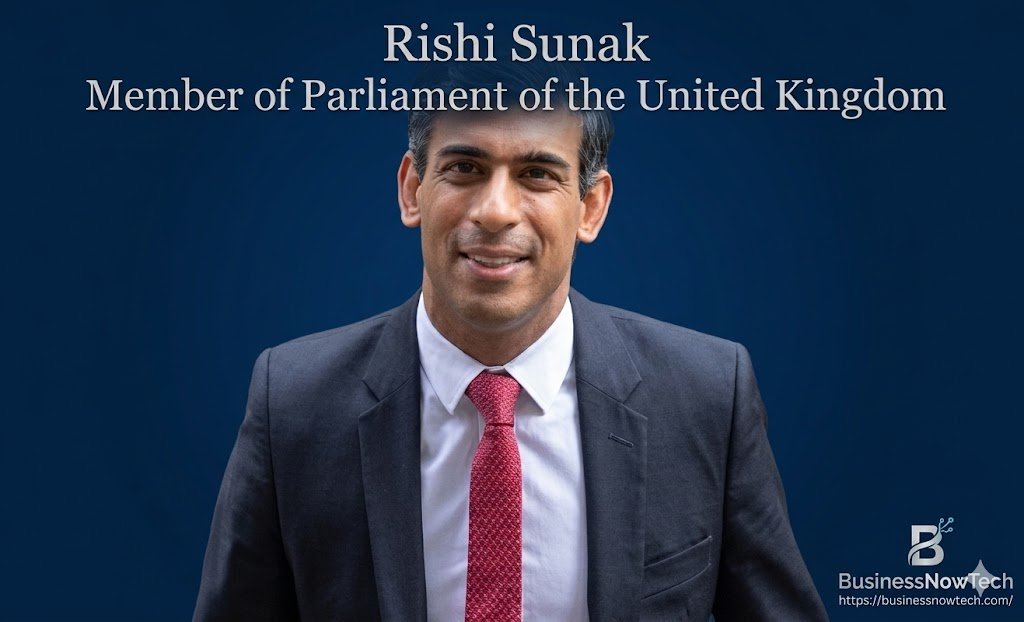
Rishi Sunak
Rishi Sunak, a British politician, former Chancellor of the Exchequer, and the youngest Prime Minister of the United Kingdom in over two centuries, has had a remarkable journey that has made him one of the most prominent figures in British politics today. Known for his calm demeanor, expertise in economics, and ambitious political career, Sunak’s rise to the highest political office in the UK was both swift and impressive.
Early Life and Education
Rishi Sunak was born on May 12, 1980, in Southampton, England, to Indian immigrant parents. His father, a general practitioner, and his mother, who ran a pharmacy, instilled in him the values of hard work and ambition. Growing up, Sunak was academically gifted, attending Winchester College, one of the country’s most prestigious private schools. His time at Winchester was marked by his leadership abilities, as he was elected head boy and was actively involved in the school’s student activities.
Rishi Sunak continued his studies at Oxford University, where he graduated with a first-class degree in Philosophy, Politics and Economics (PPE), a subject traditionally chosen by many aspiring British politicians. After Oxford, he furthered his education by completing an MBA at Stanford University in the United States, where he met his future wife, Akshata Murty, daughter of Narayana Murthy, the co-founder of Infosys, one of India’s leading technology companies.
Career in Finance
Before entering politics, Rishi Sunak had a successful career in finance, working for Goldman Sachs and later joining the hedge fund The Children’s Investment Fund (TCI). His time in finance exposed him to global markets, investment strategies, and economic policy, all of which would play a pivotal role in shaping his future career as an economic policymaker. His work at TCI and co‑founding Theleme Partners, a hedge fund, contributed significantly to his financial acumen.
Sunak’s wealth, combined with his education and career experience, positioned him as a rising star in the world of British politics. His finance background would later influence his policy decisions during his time as Chancellor, where he was responsible for overseeing the UK’s economic response to challenges such as the COVID‑19 pandemic and its aftermath.
Entry into Politics
Rishi Sunak entered politics in 2015, when he was elected as a Member of Parliament (MP) for the Richmond constituency in North Yorkshire, representing the Conservative Party. Sunak’s victory was seen as a stepping stone for a promising career in British politics, given his strong background in economics and his fresh perspective as a younger member of the Conservative Party.
His rise through the ranks of British politics was swift. In 2018, he was appointed Parliamentary Under-Secretary of State for Local Government, and in 2019, he was promoted to the role of Chief Secretary to the Treasury. His work in the Treasury caught the attention of then-Prime Minister Boris Johnson, who appointed him as Chancellor of the Exchequer in February 2020.
Chancellor of the Exchequer
As Chancellor, Rishi Sunak played a critical role in the UK’s economic response to the COVID-19 pandemic. His leadership during the crisis was marked by significant economic interventions, including the introduction of the Coronavirus Job Retention Scheme (furlough scheme), which helped millions of workers during the lockdowns. The furlough scheme provided workers with financial support while businesses were forced to close or scale down operations, saving jobs and preventing further economic collapse.
Despite facing criticism over some aspects of his handling of the crisis, such as the timing of certain support packages, Sunak’s proactive approach to the economy gained him widespread praise and further solidified his position as one of the UK’s most prominent political figures.
Prime Minister of the United Kingdom
In October 2022, following the resignation of Liz Truss, Sunak became the leader of the Conservative Party and was appointed Prime Minister by King Charles III. He was the youngest prime minister in over two hundred years and became the first British Asian and Hindu to lead the country. His election came at a time of political instability and economic uncertainty, as the country faced the aftermath of Brexit and the economic fallout from the pandemic.
As Prime Minister, Sunak focused on economic recovery, addressing inflation, and stabilizing the government’s finances. His leadership style was pragmatic, often emphasizing fiscal responsibility and the need for long-term economic reforms. His government introduced measures to curb inflation, manage public sector spending, and reinvigorate Britain’s trade relationships.
Resignation and Future Prospects
After a challenging 2024 general election, in which the Conservative Party suffered a significant defeat, Rishi Sunak announced his resignation as Prime Minister in July 2024, following the election results. His leadership had been marked by attempts to stabilize the UK’s economy and address social challenges, but his time in office came to an end with the rise of a new Labour government led by Keir Starmer.
Despite the challenges faced during his tenure, Sunak remains a key figure in British politics and continues to serve as an MP. There is ongoing speculation about his future political ambitions, with many predicting that he may make a return to the front lines of politics in the years to come.
Personal Life and Family
Rishi Sunak is married to Akshata Murty, with whom he shares two daughters. The couple’s wealth, derived in large part from Murty’s shares in Infosys, has attracted attention, but Sunak has maintained that his personal finances are separate from his political career. Akshata Murty has also supported Rishi Sunak political journey, and the couple’s family life has largely remained private, despite occasional public appearances.
Net Worth and Public Perception
Rishi Sunak and his wife, Akshata Murty, are estimated to have a combined net worth of over £700 million, largely attributed to the Infosys fortune. This wealth has been the subject of some public scrutiny, especially during times of economic hardship, where questions have been raised about the contrast between Sunak’s personal wealth and the economic struggles faced by ordinary citizens.
However, Rishi Sunak has remained popular among those who appreciate his calm leadership style and economic competence. His ability to navigate financial crises and deliver policies aimed at improving Britain’s economic outlook has won him respect both at home and internationally.
Conclusion
Rishi Sunak’s political career has been one of significant milestones, from a finance professional to becoming the Prime Minister of the United Kingdom. His leadership during the COVID-19 pandemic, his handling of the country’s finances, and his resilience through political crises have defined his time in office. While his tenure was relatively short, Sunak’s legacy will likely be one of economic stability, fiscal responsibility, and a representation of diversity in the highest levels of British politics.
As he continues to serve as an MP, his future in politics remains bright, and many speculate that he will play a key role in the UK’s political landscape for years to come.
About the Author